Russia Can Now Launch Hypersonic Cruise Missiles From Underwater
Table Of Content
- Baykar next-gen KEMANKEŞ 2 mini cruise missile development
- The Air Force's Hypersonic Scramjet Missile Aced Its Final Test, Beautifully
- Breaking Defense In your inbox
- Russia Can Now Launch Hypersonic Cruise Missiles From Underwater
- Air Force Awards $985M Hypersonic Cruise Missile Contract to Raytheon Technologies
- Air Force selects Raytheon in $985M hypersonic cruise missile contract
- America’s Secret Hypersonic Weapon Is About to Stun the Pacific
The Air Force awarded RTX subsidiary Raytheon a contract for the weapon in 2022 with a scramjet to be supplied by Northrop Grumman. The HACM draws from previous work done with DARPA and continues a partnership with Australia. WASHINGTON — The Air Force is looking to move ahead with flight testing for its new hypersonic cruise missile in fiscal year 2025, according to a top service official and budget documents.
Baykar next-gen KEMANKEŞ 2 mini cruise missile development
The Navy and Army are jointly working on a separate hypersonic weapon, though the project has been set back by delays. The Navy is additionally developing an air-launched hypersonic ship-killer dubbed the Hypersonic Air-Launched Offensive Anti-Surface (HALO) missile. In 2020, the U.S. and Australia jointly began the Southern Cross Integrated Flight Research Experiment partnership, or SCIFiRE. The contract will mature the Raytheon SCIFiRE prototype into an actual weapon system. With a selection of the Raytheon SCIFiRE prototype design, the HACM programme will now operationalise this concept for integration with a fighter aircraft to deliver two leave-behind assets with operational utility.
The Air Force's Hypersonic Scramjet Missile Aced Its Final Test, Beautifully
Today, the atoll is used as a bullseye for a variety of missile tests, particularly Minuteman III missiles launched from Vandenberg Air Force Base in California. Indications that a test might be forthcoming appeared on social media and in the Air Force’s media stream over the weekend. The Defense Visual Information Service published several photos of a B-52H Stratofortress heavy strategic bomber carrying a live ARRW missile.
Breaking Defense In your inbox
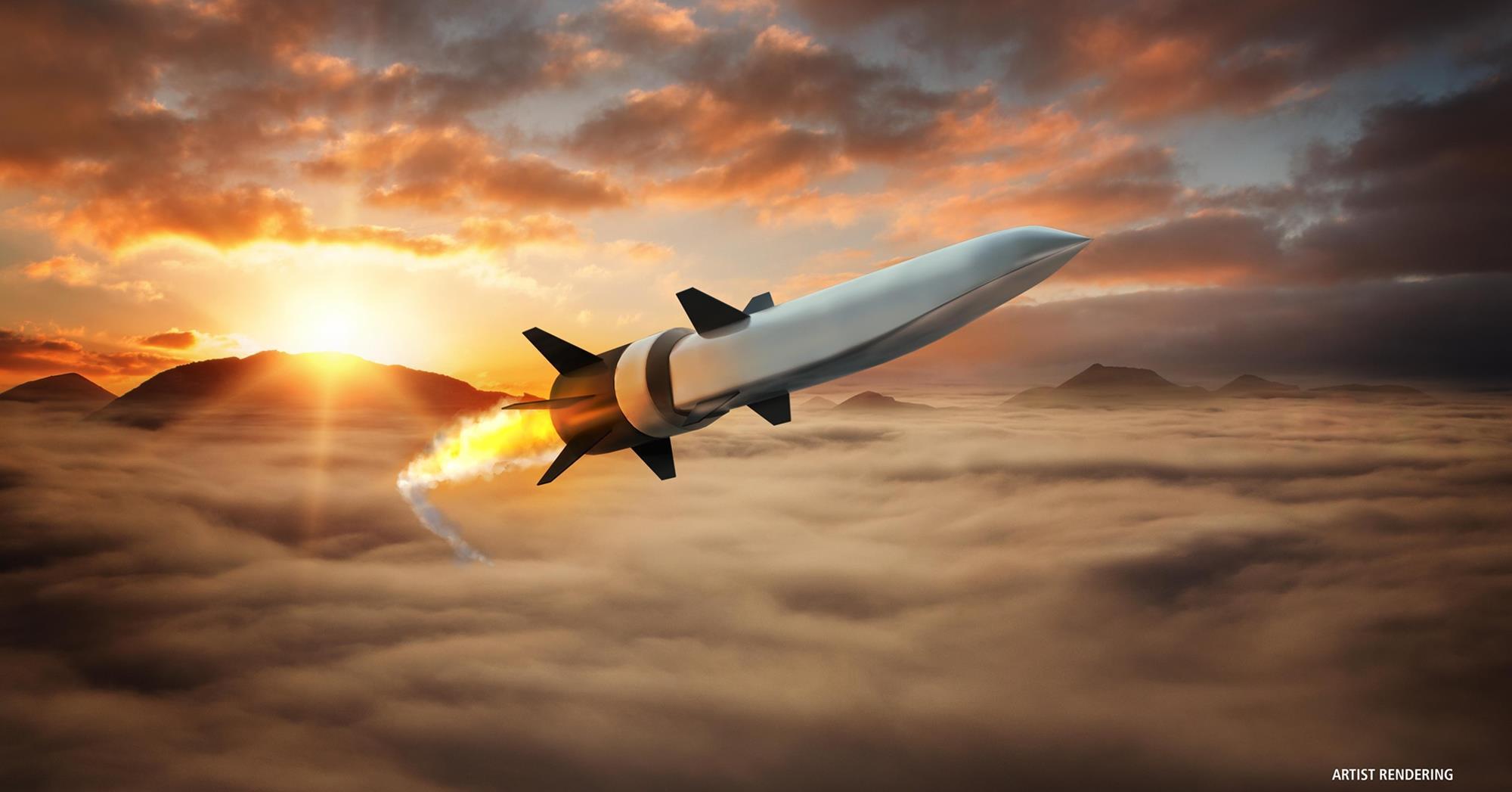
Raytheon and Northrop Grumman won a contract worth $985 million to develop the world’s first hypersonic cruise missile. HACM, developed for the United States and Australia, is an air-launched hypersonic cruise missile designed to quickly strike targets on the ground. Under the terms of the contract, the Pentagon should see the first operational missiles in 2027. Whatever the case, the main benefit that hypersonic cruise missiles offer over existing subsonic and even supersonic designs is the ability to cross large distances in very short amounts of time.
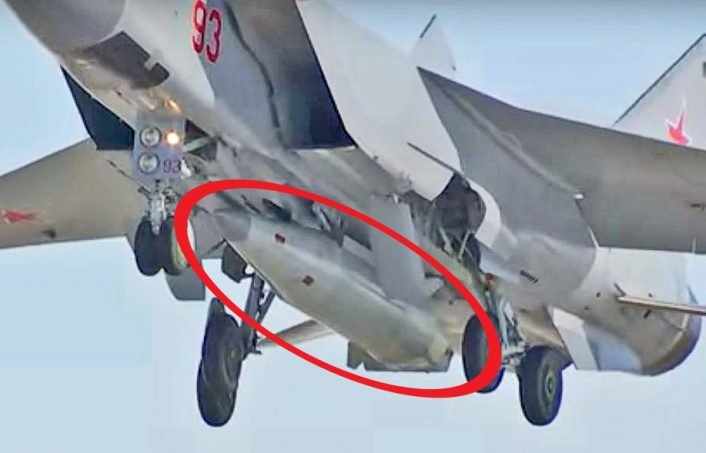
The Zircon has a two-stage propellant system that uses a solid-fuel propellant to bring it up to speed, then is powered by a scramjet combustion engine. The launch platform for the missile will apparently be Russia’s nuclear-powered cruise missile submarine, the improved Yasen-class, which is Russia’s newest and most advanced. The improved Yasen-class has a low or non-magnetic steel hull that either greatly reduces or altogether eliminates its magnetic signature. The contract will “operationalize the Raytheon SCIFiRE prototype design for fighter aircraft integration and deliver two leave-behind assets with operational utility,” USAF said.
Air Force Awards $985M Hypersonic Cruise Missile Contract to Raytheon Technologies
The Air Force assistant secretary for acquisition, technology and logistics told reporters earlier this month that the service will study the results of the final ARRW test to help it decide what hypersonic capabilities it will need. Interestingly, the pictures from the hypersonic weapon familiarization training event at Edwards yesterday also include a very good look at what appears to be a live AGM-183A missile. The weapon, seen loaded on B-52, has a yellow band around its body, which typically denotes a live round.
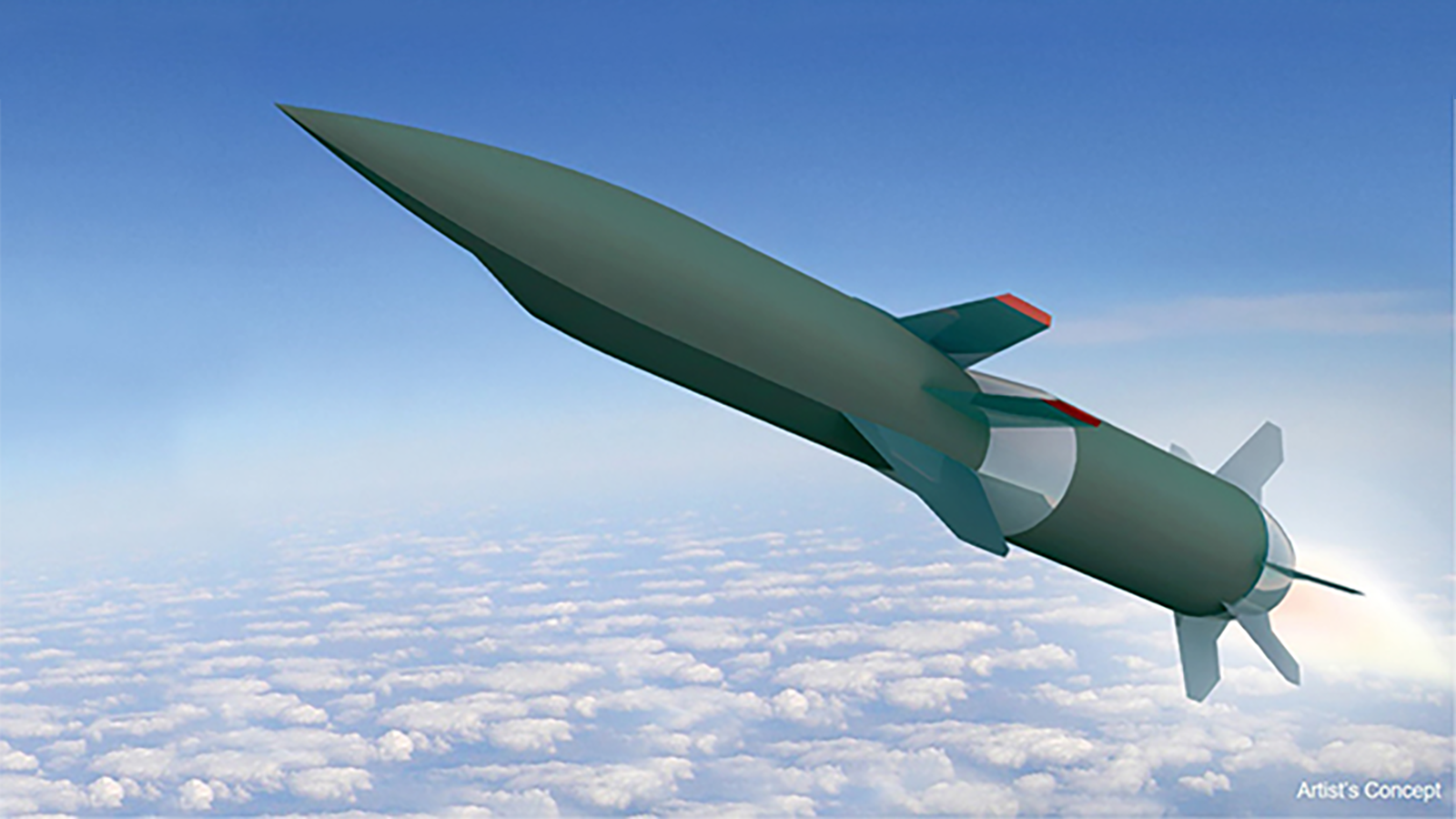
The ARRW was designed as a high speed conventional missile that could quickly take out mobile and other time-sensitive targets. In 2018, Flight Global claimed that the weapon reaches speeds of up to Mach 20, or 15,345 miles an hour. WASHINGTON — The U.S. Air Force on Thursday awarded a $985 million contract to Raytheon Technologies to develop and demonstrate scramjet-powered hypersonic cruise missiles. HACM is an air-breathing, scramjet-powered cruise missile that can fly at speeds greater than Mach 5 and maneuver on the way to its target, making it harder for adversaries to shoot it down.
America’s Secret Hypersonic Weapon Is About to Stun the Pacific
It also has a protective cover over its rear end and is marked "AR-AUR-004," with AUR very likely standing for "All Up Round," a term that refers to a complete missile. Both the Yasen and improved Yasen-class have eight vertical launch tubes for launching either Kalibur anti-ship/anti-land missiles or P-880 Onyx anti-ship missiles. The Air Force said in July that it and DARPA expect to continue with the HAWC program, despite the selection of a HACM prime.
Air Force Looks to Reusable Hypersonics as ARRW Ends and HACM Gears Up for Testing - Air & Space Forces Magazine
Air Force Looks to Reusable Hypersonics as ARRW Ends and HACM Gears Up for Testing.
Posted: Wed, 13 Mar 2024 07:00:00 GMT [source]
Although there are clear signs and portents of an ARRW test, nobody outside of the U.S. government knows when it will take place… or if it’s already happened. The Air Force typically announces tests within 72 hours of their taking place, so we are within the envelope of a test that took place earlier in the week. If it hasn’t happened yet, the clock is ticking—the NOTAMs and NAVWARNs both have expiration dates. The House hearing on Tuesday was convened so that lawmakers could receive updates on hypersonic efforts across the Pentagon, which are seen as key to counter advances made by Russia and China on the technology.
Kendall has sounded a more optimistic tone about the Hypersonic Attack Cruise Missile program, and the fiscal 2025 budget request proposes $517 million to keep developing that program. The HACM weapon, developed by Northrop Grumman and RTX subsidiary Raytheon, is an air-breathing missile that the Air Force said would be smaller than ARRW and able to fly along “vastly different trajectories” than the boost-glide ARRW. Without additional context and not being able to see the full missile, it is hard to say definitively that this missile is meant to directly represent HACM, as the picture caption implies. There is a possibility that the weapon, which may also be a test article or a mockup, could reflect a previously developed, but related design. HACM follows on directly from the Defense Advanced Research Projects Agency's (DARPA) Hypersonic Airbreathing Weapon Concept (HAWC) program, which the Air Force was closely involved with.
Cruise missiles that can move five times the speed of sound or faster would make military attacks more unpredictable and offer a quicker long-range strike option. The U.S. already owns weapons that fly that quickly, but future hypersonic weapons are expected to maneuver more easily and stealthily in flight. In 2020, the Air Force entered into a technology partnership with Australia known as SCIFiRE (Southern Cross Integrated Flight Research Experiment) to jointly research hypersonic missile prototypes, leveraging knowledge in the two countries. Boeing, Lockheed Martin, and Raytheon received 15-month SCIFiRE contracts in June 2021 to complete preliminary designs of a hypersonic cruise missile, which became HACM.
Like many aircraft, turbofan engines power cruise missiles, propelling them at subsonic speeds. Cruise missiles fly low to avoid radar detection, and a slower speed helps them fly lower and hug the ground. Tomahawk cruise missiles, for example, fly at an altitude of between 98 and 164 feet at a speed of 550 miles per hour. The HACM “is an air-launched, scramjet-powered hypersonic weapon designed to hold high-value targets at risk in contested environments from standoff distances,” the Air Force said.
At AUSA Global Force 2024, IAI will present integrated, AI-driven combat systems – both manned and unmanned – that are opening new opportunities on the battlefield. The Air Force has shown a strong interest in the HACM program, requesting $316.8 million in its fiscal 2023 budget submission — an increase of almost $257 million more than FY22. Kyle Mizokami is a writer on defense and security issues and has been at Popular Mechanics since 2015. Kyle’s articles have appeared at The Daily Beast, U.S. Naval Institute News, The Diplomat, Foreign Policy, Combat Aircraft Monthly, VICE News, and others. Hypersonic Attack Cruise Missile (HACM) will be the first scramjet-powered weapon to enter production.
HACM is a hypersonic weapon, which means it flies at Mach 5 or faster—but we don’t know exactly how much faster it will fly. Most missiles that remain in the atmosphere, like air-to-air missiles, top out at around Mach 3+. SCIFiRE was descended from the earlier HIFiRE program, which tested a scramjet engine at speeds up to Mach 8. The Air Force's current plan is to begin fielding HACM in 2027, with the F-15E being the first aircraft to be able to carry it operationally. Members of the B-1, B-2, and B-52 bombers communities were all present at the event at Edwards yesterday.
Most of the avowed nuclear powers have technically had hypersonic weapons for a half-century or more, as the ballistic missiles that carry nuclear warheads travel at hypersonic speeds, impacting their targets at up to 15,000 miles per hour. This new generation of hypersonic weapons is different in that it is non-nuclear in nature—at least so far—and would be used immediately in a conventional war. ARRW is one of the Air Force’s two main programs to develop an air-launched hypersonic weapon that could fly faster than Mach 5 and be highly maneuverable. China and Russia have invested heavily in their own hypersonic weapons, and the Pentagon is under pressure from Congress to show more progress toward fielding the United States’ own capabilities.
With a spotty test flight record already and one planned test left for ARRW, Air Force officials have said they will closely study the results to inform future hypersonic efforts. The service isn’t planning on procuring the weapon for now, though officials have suggested that could change in future budgets. Air Force officials originally had hoped to declare the weapon operational — the Pentagon’s first — as early as 2022. The other is the Air-Launched Rapid Response Weapon (ARRW) made by Lockheed Martin, which consists of a hypersonic glide vehicle mounted on a rocket. HACM, an air-launched, scramjet-powered hypersonic munition, is being developed to hold long-range, high-value targets in highly contested scenarios.


Comments
Post a Comment